Resources

Articles, guides, and checklists

Better Together

Get guidance on grief, planning and finding your better place. Start with our free welcome guide.

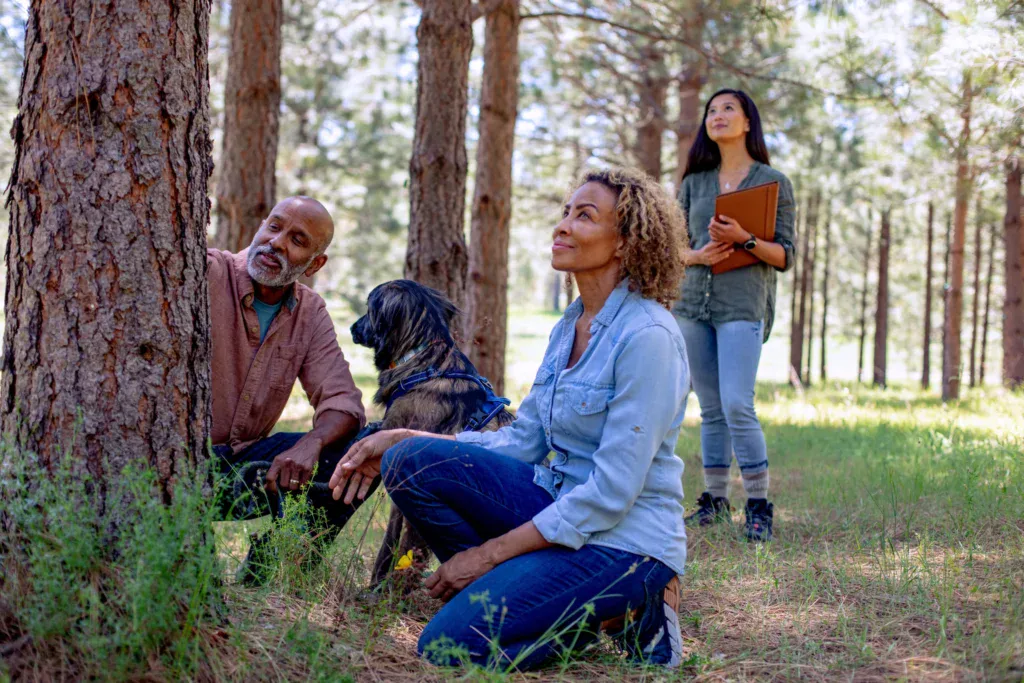
a couple and guide look up at a tree in Better Place Forests

What is Better Place Forests?

Researching end-of-life planning options can feel a little overwhelming. You might be asking a myriad of questions like: How do I want my family to remember me? How can I choose the best end-of-life option that aligns with my values? What is the most affordable? Is there a greener, more natural end-of-life option that I can feel good tying to my legacy?
Better Place Forests can help guide you through these questions. We’re here to help make your end-of-life planning be as stress-free as possible. Learn more about Better Place Forests, common questions about choosing a memorial forest, and how we ensure the planet and your legacy are protected for generations to come.

What is Better Place Forests?

Better Place Forests provides you with a beautiful place to write a better ending to your story. At one of our several protected memorial forests, you can choose a memorial tree as your final resting place, commemorated with a personalized marker that makes it easy for your loved ones to find and visit you. Our team of arborists and forest stewards maintain these beautiful outdoor spaces, while our advisors and customer care team are here to help you choose a memorial plan that honors you and your family’s legacy for generations to come.

Is Better Place Forests too good to be true? Are you a legitimate company?

Yes! This may be a common question because we are a new concept. Better Place Forests has been helping and serving families since 2015 – it was in 2015 that Sandy Gibson, co-founder and CEO, founded the company with his childhood best friends –– in memory of his late parents. We’re proud to serve communities surrounding our 9 forests around the country. You can read more about us in Fast Company or the Today Show.

Is Better Place Forests a cemetery?

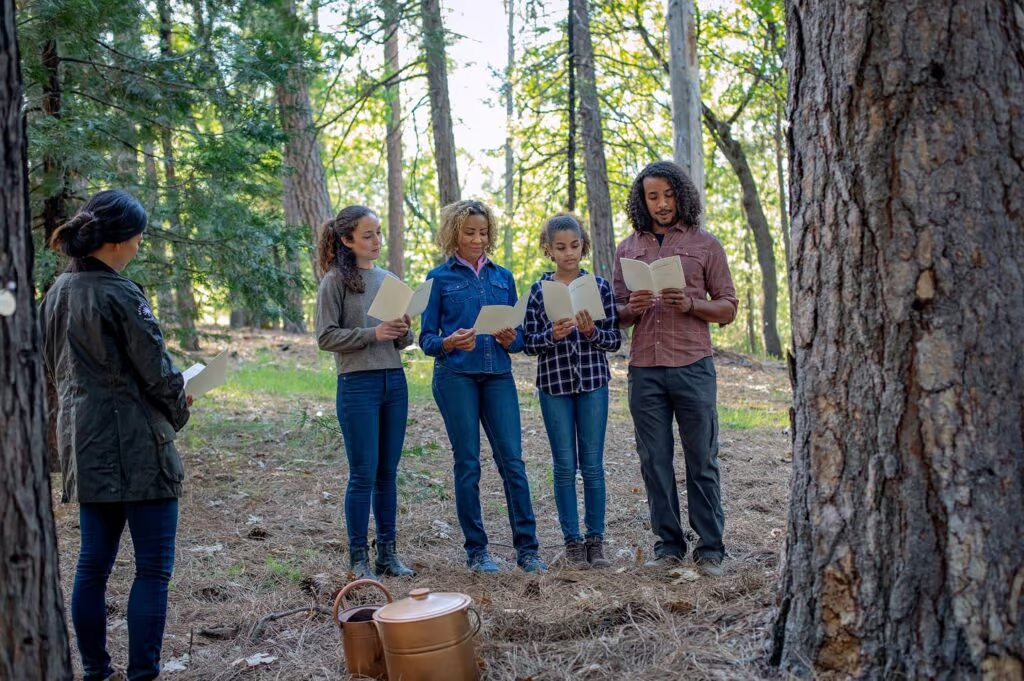
No, Better Place Forests is a sustainable, natural alternative to a cemetery for those who choose cremation. Instead of a traditional burial, Better Place Forests offers a more natural option. During a memorial ceremony, ashes are mixed with native soil at the base of your chosen memorial tree, where you will become part of a healthy, thriving forest.

Does Better Place Forests offer cremation?

Better Place Forests does not provide cremation services. You can find trusted partners by searching for local funeral homes or crematoriums.

Will the forest be protected forever?

Better Place Forests is committed to conserving forestland, maintaining healthy forests, and protecting your memorial tree for generations to come. Protecting your legacy is our top priority and something we don’t take lightly. We work with local land trusts and conservation organizations to permanently protect the forest so even if we’re ever gone, your legacy won’t be. When you choose a tree with us, you can do so with peace of mind knowing your family will always be able to come and honor your memory.
To maintain our forests, we do extensive preventative work to make sure our memorial trees and forests are as healthy as possible. When selecting future forests, we find forestland with high conservation value and community support to help protect it. We then hire local arborists and foresters to help us understand the unique ecosystems of each forest.
Our arborists regularly assess the forest for potential issues (like disease), while also pruning individual trees to ensure safety and accessibility for you and your loved ones. We go through this meticulous process with each of our forests to make sure your memorial tree will grow with your family.

How much does a memorial tree cost?

Pricing for each tree is based on several factors, including location, setting (such as views and water features), tree type and size, and the number of spreading rights. Our multiple ash spreading policy allows the right to additional ceremonies (including pets) to be added at any time.
We intentionally structure our pricing with flexibility, transparency, and affordability in mind so you feel confident in your decision in choosing one of our beautiful forest spaces to honor your memory.
While an average burial, plot, and headstone costs around $15,000 per person, Better Place Forests offers a range of prices for any budget, at less than half the cost of a traditional burial. We save you time, money, and stress, so you can plan your memorial with peace of mind.

Do I get to pick my own tree, or does Better Place Forests choose it for me?

Yes, you get to pick your own tree. Choosing your final resting place is a deeply personal decision, and we think the honor of choosing your memorial tree should be yours. There may be something that strikes you about a particular tree, the view, or its surrounding landscape. That’s what makes choosing your tree such a special experience. We have various tree sizes, locations, and forests to help you pick a tree that’s uniquely yours. Read about how our customers, sisters Susan and Mary, chose their tree.

Can I access my tree by foot?

Each of our forests is maintained with your safety and accessibility in mind. Most of our trees are a short walk from the visitor center, but others are more off the beaten path. If your tree isn’t easily accessible for you, or if you require additional assistance, we offer a mobility quad to help you access your tree as needed. We work with guests to find the best, and most accessible, tree for them to visit for years to come.

What if my tree dies?

If your memorial tree dies, we’ll plant a new tree in the same spot, or close to, your original tree if that’s feasible. If your tree dies but ashes have not yet been spread, we’ll help you choose a comparable tree within the same forest or allow you to transfer forests. If there’s a fire or natural disaster, we commit to replanting your tree or doing everything we can to restore or repair the damage.
We work diligently with local experts, following forest management best practices to ensure that we’re not only choosing the best possible sections of the forest for your memorial but also preserving the longevity and health of your tree.

What does it mean to have a memorial tree at Better Place Forests?

Choosing a tree with Better Place Forests is an incredibly special way to choose an end-of-life option that allows you to protect the planet and the people you love.
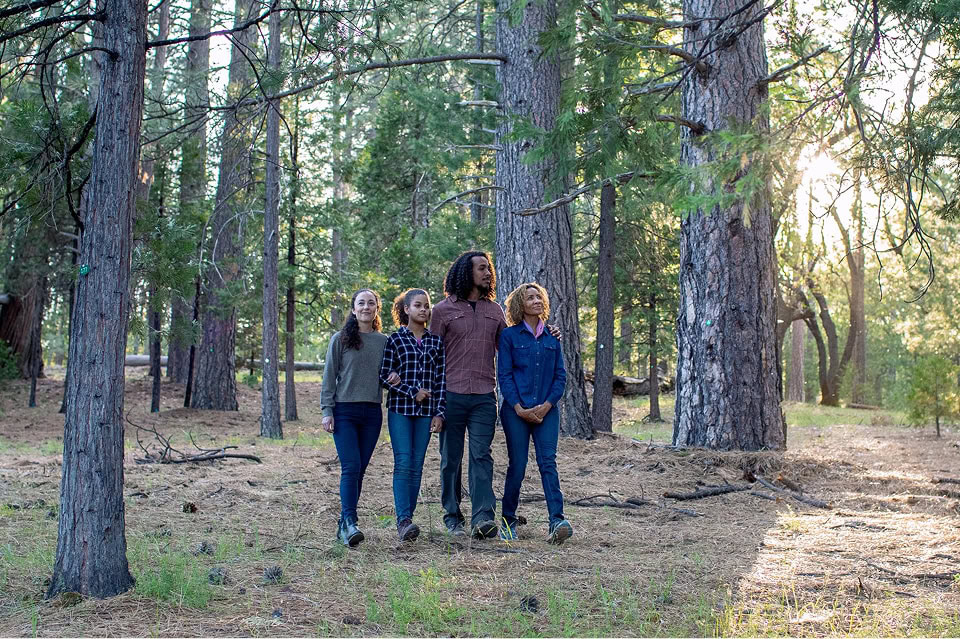
A memorial tree within one of our forests can represent a lifetime of happy memories and a place where your family can return to feel close to you. It can also provide a comforting sense of closure and peace knowing that at the end of your life, you’re becoming a part of nature and will forever be connected to the natural world.
Legacy planning can feel daunting — but it doesn’t have to be with a trusted team behind you. Book a free online forest tour to learn more about how Better Place Forests can help you get started.
Share Article

Better Together

Get guidance on grief, planning and finding your better place. Start with our free welcome guide.

Want to know more?

Find comfort in remembrance. Discover meaningful traditions inspired by nature to memorialize your loved ones.
10 Memorial Forest Traditions to Memorialize a Loved One
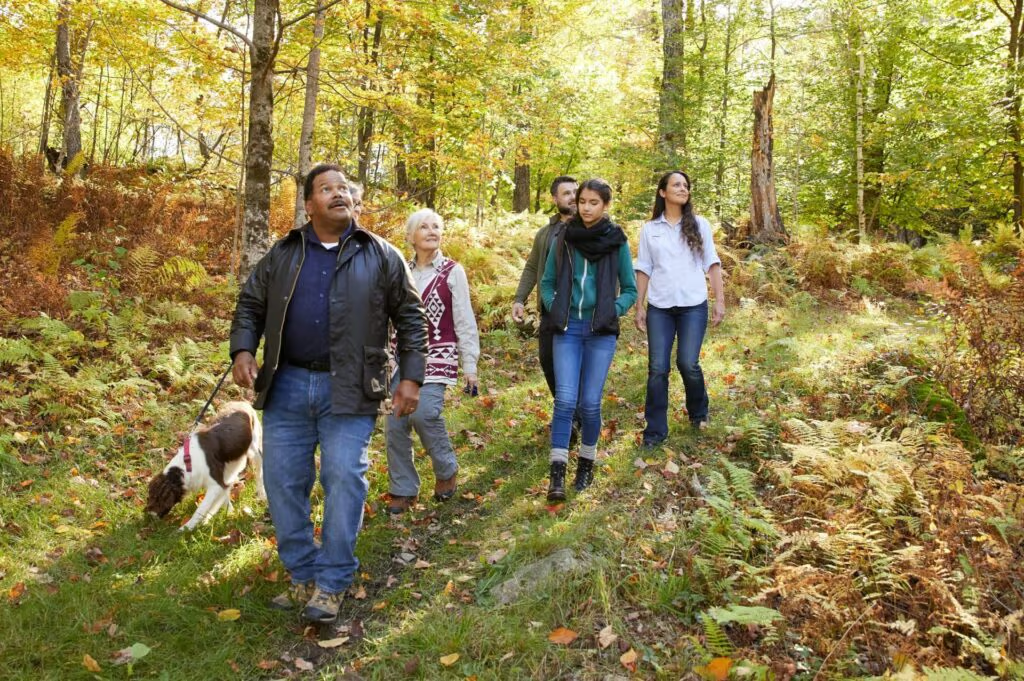
A family walks through the forest to look into affordable burial options
9 Affordable Burial and Cremation Options
Final arrangements are no longer an afterthought. A growing number of people are being proactive about their funeral plans and considering the environmental impact of their choices, which has led to rising interest in natural burial. Unlike conventional methods, natural burial offers a range of options that are often more affordable, simple, and environmentally conscious. According to the National Funeral Director’s Association 2024 Consumer Awareness and Preferences Report, 68% of respondents expressed interest in natural burial—up from 55.7% in 2021. This shift signals a broader cultural shift in how we approach end-of-life decisions. People are prioritizing values like environmental stewardship and their connection to nature. As a result, natural burial has emerged as a meaningful and sustainable alternative to traditional practices, symbolizing a more thoughtful and values-driven approach to honoring loved ones. Whether it’s about reducing your environmental footprint, connecting with nature, or creating a more meaningful goodbye, natural burial redefines how we rest. This guide explores what natural burial is, why it’s on the rise, and what it costs. 5 Reasons Why People Are Choosing Natural Burial More and more people are opting for natural burials—and with good reason. Here are five reasons why more people are opting for natural burial: 1. Sustainability Natural burials are designed to have minimal environmental impact. They avoid harmful embalming chemicals, reduce land disruption, and conserve natural resources. Unlike traditional burials, which emit around 250 pounds of carbon, natural burials can sequester approximately 25 pounds. This makes natural burial an excellent end-of-life choice for anyone prioritizing the health of our planet. By forgoing embalming and choosing minimally invasive burial methods, natural burials honor both the land and the body of the deceased. The process supports the natural cycle of life, enriching the earth with nutrients rather than polluting it. 2. Conservation Natural burial grounds forego embalming fluids, require biodegradable coffins, and conserve land which help protect and restore natural landscapes. Funds paid to natural burial plots are also reinvested into conserving forests, meadows, and other ecosystems. “The purpose of conservation is to offer the greatest good to the greatest number of people for the longest time,” says the chief of the US Forest Service American Forester Gifford Pinchot. Every natural burial helps protect forest ecosystems where wildlife and plant habitats can thrive while giving families a place to honor their loved ones. 3. Return to Nature Natural burial allows you to return to the earth. By allowing the body to naturally decompose, nutrients are recycled into the soil, fueling new life and a return to the natural cycle. This practice embraces minimal intervention, often using biodegradable caskets or shrouds to support the process. It highlights that our bodies belong to nature and when they return to the earth they can help continue the cycle of life. 4. Reflect Your Values Many people spend their life caring for the world around them whether through recreational gardening or more involved philanthropic efforts. With natural burial, these values can guide one’s final resting place. For those dedicated to enjoying the outdoors and caring for the planet, it’s only fitting to choose a final resting place in nature. A natural burial provides a meaningful resting place while reflecting values of care, sustainability, and simplicity. 5. Participation Natural burials provide families with an opportunity to play a more active role in the end-of-life process. Instead of immediately handing over the process when a loved one passes, families are encouraged to be directly involved in creating heartfelt, intimate goodbyes. This hands-on approach allows families to honor their loved ones in a way that aligns with their values and wishes, bringing a sense of comfort and peace during a difficult time. Additionally, natural burial sites offer ongoing opportunities for connection with loved ones to celebrate memories while enjoying the beauty of nature. The Issues with Traditional Burial For decades, traditional burial practices have shaped how families navigate the loss of a loved one. These practices often rely on costly services and leave families with an expensive and resource-intensive end-of-life system that can feel detached from personal connection. On top of that, environmental concerns have become increasingly significant. Traditional burials center around embalming, metal caskets, and heavy concrete vaults. And while this offers familiarity, it also has its issues. Embalming fluids, non-biodegradable materials, and excessive land usage take a toll on the planet, leaving many questioning if there’s a better way. As more people recognize these challenges, the demand for environmentally sustainable and emotionally resonant end-of-life choices has fueled interest in natural burials. Who’s Choosing Natural Burial Natural burial isn’t limited to a specific type of person. Its appeal lies in the simplicity, sustainability, and personalized experience it offers. This choice typically resonates with: Individuals who prioritize eco-friendly practices Those seeking a closer connection to nature Families desiring more active roles in honoring their loved ones’ lives Natural burial embraces people from all walks of life. Whether you’re a conservationist, an avid gardener, or someone who cherishes the outdoors, this option reflects a shared respect for the environment. Environmentally-Conscious Burial Options There are many ways to choose a more sustainable end-of-life option than what’s offered with traditional burial. Among the non-traditional approaches gaining popularity are natural burial, human composting, water cremation, and fire cremation. Each method offers unique environmental benefits, but natural burial stands out as the most sustainable choice. Here’s a quick comparison of the environmental benefits and costs associated with these non-traditional methods: Comparison of Non-Traditional Disposition Methods Method Net Carbon Footprint Fuel Expenditure Amount of left-over product for disposal Enviro Benefits (➕) & Costs (–) Natural Burial Sequesters 25lbs CO2 per burial,10 tons per acre Transportation to cemetery None ➕ Land protection ➕ Nutrient contribution to soil Human Composting Unknown ・Producing and transporting natural materials to the facility ・Construction and maintenance of facility and units ・Transporting finished material 1+ cubic yard of leftover material 10-15 pounds of pulverized bone ➕ Resortation of depleted soil – Material acquisition – Facility maintenance Water Cremation 150-200lbs CO2 emissions per person ・Electricity or propane to heat 100 gal of water under pressure for 3-12 hrs ・Processing and transport of potassium hydroxide 100-300 gallons of effluent 10-156 lbs of pulverized bone – Potential algae bloom from runoff – Disposal of effluent Fire Cremation 250-536lbs CO2 emissions per person Up to 500 gallons of field, usually natural gas to burn at 2000℉ for 3-4 hours 7-10 lbs of pulverized bone – Potential algae bloom from runoff – Mercury poisoning of air and water Source: Green Burial Council Challenges of Natural Burial The key challenge to natural burial is the need for pre-planning coupled with many people’s reluctance to discuss end-of-life plans. Since the body is not embalmed, the burial process needs to happen quickly, adding a layer of urgency. This paired with the small amount of natural burial sites can be tricky because natural burial sites are not yet abundent, making accessibility for many a roadblock. Arranging for transportation of the body is possible, but having early discussions and a clear plan in place helps reduce the stress of last-minute decisions, ensuring a smoother process for loved ones. Planning for the Future Natural burial is changing how we approach end-of-life traditions. Could natural burial sites be the cemeteries of the future? It’s entirely possible as more people rethink tradition and acknowledge environmental challenges. Natural burial represents an opportunity for positive change—enabling families to make impactful choices about their legacy.
Why People Are Choosing Natural Burial in 2025
LET US GUIDE YOU

Whenever you’re ready, we’re here

IMMEDIATE NEED
Someone has died

We’ll guide you through exactly what to do, right now.

PREPARING
Facing a loss

Start preparing for the loss of a loved one in the near future.

HAVE ASHES
Holding ashes

Give ashes a permanent resting place in nature.

LOOKING AHEAD
Planning for the future

Make your wishes clear now, so your family never has to guess.

Talk to a Guide, 24/7

When you’re ready, we’re here.

Explore at your own pace

See the two ways families honor a life.