Human composting, also called natural organic reduction, is a process that transforms a body into nutrient-rich soil instead of ash. The body is placed in a vessel with organic materials like wood chips, straw, and wildflowers, and microbes break it down over 30 to 60 days. The resulting soil can be kept, planted with, or returned to the earth in a protected forest.
What does human composting mean?
Human composting is similar to the composting you’d do for your garden. Essentially, organic material — in this case, a body — is broken down and becomes nutrient-rich soil that can be used to grow new organic life, like plants and food. This process, known as natural organic reduction (NOR), is an accelerated version of natural decomposition. The term has become more well-known lately thanks in part to a bill that passed in Washington State making human composting legal for the first time.
Natural organic reduction and human composting describe the same process. Most families find “natural organic reduction” a better fit for the care and intention behind it, which is why it’s the term we use at Better Place.
How is human composting done?
To compost a human, a body is placed in a vessel surrounded by natural materials like straw, alfalfa, wood chips, wildflowers, fungi, and bacteria. Oxygen is circulated through the vessel, and microbes gradually break the body down. The transformation into soil takes roughly 30 to 60 days, and families can generally expect to receive their loved one’s soil within two to three months.
There’s no flame, no embalming chemicals, and no burial vault. Natural organic reduction produces under 20kg of CO2, compared with roughly 500kg for a traditional burial — and at Better Place, every cremation option, including natural organic reduction, is carbon-neutral at no extra cost.
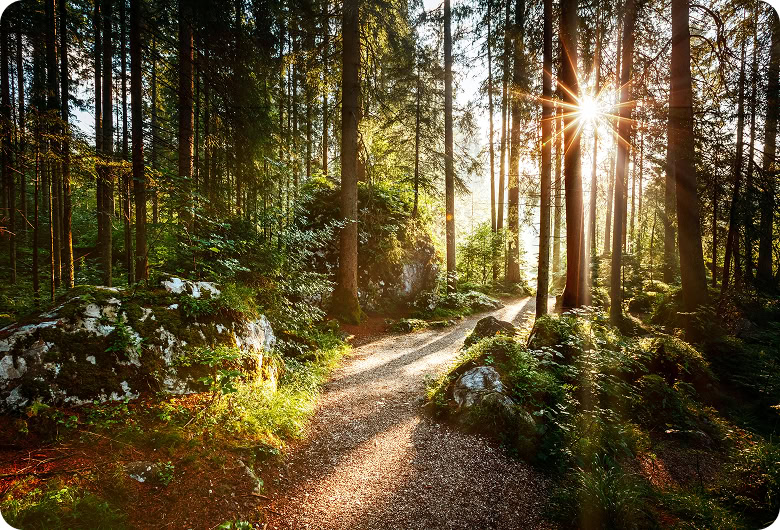
Image courtesy of Return Home, our partner offering human composting or terramation services.
Is it legal in all states to human compost?
Not yet — but the list is growing quickly. Human composting is currently legal in:
- Washington (2019)
- Colorado (2021)
- Oregon (2021)
- Vermont (2022)
- California (2022)
- New York (2022)
- Nevada (2023)
- Arizona (2024)
- Maryland (2024)
- Delaware (2024)
- Minnesota (2024)
- Maine (2024)
- Georgia (2025)
- New Jersey (2025)
There’s usually a gap between a state passing a law and facilities actually opening, because regulators need time to write the rules that go with it. In California, natural organic reduction becomes available in January 2027, and Better Place will offer it as soon as it is. If you live somewhere it isn’t yet operational, you can still choose human composting by arranging transport to a licensed facility in another state. For a fuller picture, see our guide to what states allow human composting.
How much soil does human composting create?
Quite a lot more than ashes. A single body produces roughly a cubic yard of soil — about 3 x 3 x 3 feet, and heavy enough to fill the bed of a pickup truck. Many providers return a portion to the family and handle the remainder through a conservation or land restoration program.
That volume is worth planning for. Cremated remains fit in an urn on a shelf; soil remains need somewhere to go. This is one of the first practical questions families ask, and it’s a good reason to decide on a resting place before the process begins rather than after.
What can you do with human compost?
Human composting has promising environmental benefits, but the open question for most families is what to do with the soil afterward. Some human composting companies use the soil to nourish local land, and family or friends of the deceased may pick up all or part of it.
If you have a yard, you can use the soil in your own garden — a good option for families who plan to stay in the same home for generations. It’s worth noting that if you move, your loved one can’t come with you. State rules also vary on where soil remains can be spread and whether they can be shipped across state lines.
For families who want something permanent and protected, the soil can be returned to the earth at a Better Place Memorial Tree or in a Spreading Grove in one of our Memorial Forests. The forest is conserved land, cared for through long-term stewardship — so the place you choose stays what it is, and stays reachable, for generations.
Many families do both. Because natural organic reduction creates so much more material than cremation, you might return a portion to the earth at a Memorial Tree and keep some for a garden at home.
Image courtesy of Return Home, our partner offering human composting or terramation services.
Does Better Place offer human composting?
Yes. Natural organic reduction is one of three cremation options we offer, alongside flame cremation and aquamation. It’s the most environmentally-friendly of the three: no energy-intensive heat, no water-based process, and the smallest footprint from the start. Like every option at Better Place, it’s carbon-neutral, and everything is handled for you — transportation, death certificates, permits and filing, an online obituary, and executor and grief support.
A Guide can walk you through how it compares to the other options, what it costs, and what’s available in your state. Talk to a Guide whenever you’re ready.
Can you spread soil remains in a Memorial Forest?
Yes. Soil remains from natural organic reduction can be returned to the earth at a private Memorial Tree or in a shared Spreading Grove, in any of our nine Memorial Forests across California, Arizona, Minnesota, Illinois, Connecticut, and Massachusetts.
Permits, documentation, and legal spreading are all included. Because the forest is protected and actively stewarded — with ecological monitoring, trail maintenance, and ongoing access for families — choosing a memorial here is also a conservation act. Your loved one’s soil doesn’t just rest in nature; it helps sustain it.
You don’t have to decide on timing right away, either. A Nature Memorial Ceremony can happen days, months, or even years after the process is complete.

Can you have a ceremony to return the soil to the earth?
A Nature Memorial Ceremony is a gathering in the forest where family and friends return a loved one to the earth together.
Our teams guide guests in combining their loved one’s soil remains with native forest soil and dried, organically grown flowers before placing them at the Memorial Tree or Spreading Grove. This gives people a hands-on opportunity to actively participate in the memorialization, while helping the soil remains integrate naturally into the forest floor.
The walk to the tree is part of the ceremony — quiet and unhurried. Families gather beneath the tree, share stories and readings, sow native wildflower seeds, and stay as long as they need to. Family, friends, and pets are all welcome.
Ceremonies can be Guide-led, where we handle every detail from start to finish, or self-led, where everything you need is waiting when you arrive for a private farewell at your own pace. Either way, you can bring your own officiant or personal rituals, and military honors are available for veterans.
How much does human composting cost?
At Better Place, natural organic reduction starts at $3,500. Complete packages add transportation, death certificates, permits and filing, an online obituary, carbon offsets, and executor and grief support — so what you pay depends on how much you want handled for you.
When comparing providers, check what a quoted price actually covers. Some quote the process alone; others quote everything bundled, which makes headline numbers hard to read against each other. See our cremation pricing for the full breakdown, or talk to a Guide.
Bundling cremation with a Memorial Tree or Spreading Grove saves $1,000.
Is human composting right for you?
It asks more of a family than cremation does: where the soil will go, whether a facility is operating in your state, how much of it you want to keep. Those are all answerable, and you don’t have to work them out alone.
Talk to a Guide whenever you’re ready, or compare all three cremation options side by side.