The Mi Shebeirach is a traditional Hebrew prayer for healing used across Jewish communities. Discover its meaning, history, versions, and how to recite it.
Most Powerful Hebrew Prayer For Healing
Mi Shebeirach—literally “May the One Who blessed…”—is a deeply moving Hebrew prayer commonly spoken in synagogues, homes, and hospitals. Its purpose is simple but profound: to ask God to bring healing, strength, and comfort to someone in need—whether physically, emotionally, or spiritually.
What the Jewish Prayer For Healing Means
By invoking the ancestors—Abraham, Isaac, Jacob, Sarah, Rebecca, Rachel, and Leah—the prayer connects the person seeking healing with generations of blessings. It honors tradition while offering support in a moment of vulnerability.
A Brief History
The Mi Shebeirach has been a staple of Jewish liturgy for centuries, recited during services as a communal plea for healing. More recently, figures like Debbie Friedman have introduced musical versions—often blending Hebrew and English—making the prayer feel more accessible and emotionally resonant.
Traditional Wording
A classic Ashkenazi form of the Mi Shebeirach reads:
“Mi shebeirach avoteinu v’imoteinu—Avraham, Yitzchak, and Ya’akov, Sarah, Rivka, Rachel, and Leah—may the One who blessed them bless and heal [Name] ben/bat [Parent’s Name]. May the Holy One grant them strength, complete healing of body and spirit. Amen.”
Typically, the person’s name appears with their mother’s name, following Jewish tradition.
When and How It’s Used
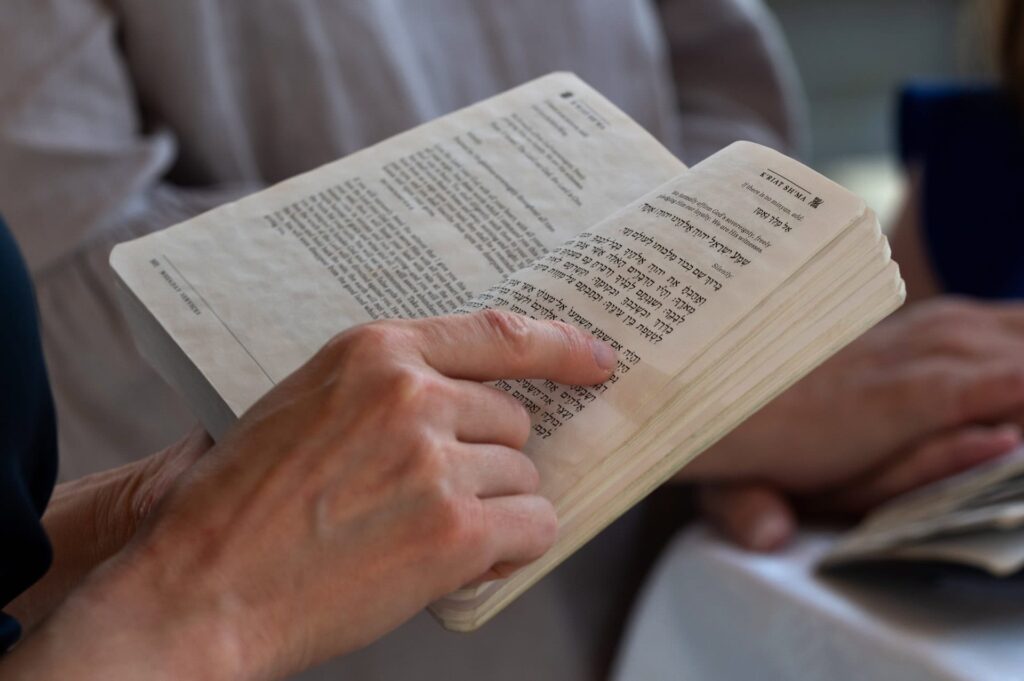
- In synagogue: Often after the Torah reading, during services.
- At home: Shared among family or friends, especially when someone is ill.
- In care settings: Hospitals, hospices, or any quiet gathering to support the sick.
- Privately: As a heartfelt personal prayer.
You can simply recite it aloud, or include it in a song or meditation—whatever feels meaningful in context.
Variations You Might Hear
- Combined Hebrew and English versions used in many Reform and Conservative congregations.
- Musical interpretations bring emotional intensity and communal connection.
- Customized versions might tweak wording to address specific emotional or spiritual needs.
Why It Matters
The Mi Shebeirach isn’t just about asking for healing—it’s about expressing solidarity, compassion, and hope. It reminds those who are suffering that they are not alone, and that their community is standing with them in prayer. It’s a beautiful reflection of refuah shleimah—the wish for complete healing of body, mind, and spirit.
Final Thoughts
Whether shared in a traditional setting, sung as part of modern worship, or whispered as a personal devotion, the Mi Shebeirach remains a powerful channel for care, healing, and unity. It’s an ancient expression of hope that continues to comfort and uplift us today.