There’s something powerful about planting a tree. Especially when that tree carries the memory of someone you love. Turning cremation ashes into a Memorial Tree isn’t just symbolic—it’s a way to root their legacy in living soil. A way to let something beautiful grow from grief and create a living memory tree. For families choosing direct cremation or looking for an alternative to traditional ceremonies, memorial trees offer something quiet, natural, and lasting. Cremated remains need care before they can nourish a tree’s roots. On their own they are too alkaline and too high in sodium, and placed directly against roots they will damage a young tree rather than feed it. At a Better Place Memorial Forest, that preparation is handled for you.
How Turning Ashes into a Tree Actually Works
Cremated remains will not grow a tree on their own. They are pulverized bone mineral, strongly alkaline, and high in sodium, and poured straight into a planting hole they will raise soil pH and salt levels past what a young root system can survive. Every method below exists to solve that one problem.
Tree urns and biodegradable planting systems
A biodegradable urn holds the ashes, a growing medium buffers the pH and dilutes the remains through a larger volume of soil, and a sapling is planted directly above. The Living Urn, Bios Urn, and similar planting systems all work this way. Kits typically run $135 to $370 and do not include the cremation, the land, or in most cases a mature tree. You plant it, and you keep it alive. This sounds easier than it actually is. See what’s involved.
Tree Pod Burial
A variation on the same idea, using a pod rather than an urn, and sometimes marketed for whole bodies. The problem with tree burial pods is that they require you to plant a sapling above the pod which is difficult to grown and maintain. See how tree pod burial differs from Memorial Trees.
Scattering or burying at a mature Memorial Tree
Rather than growing a new tree, the remains are returned to the soil around an existing, mature tree that is already established and already healthy. A mature tree’s root system is far more tolerant of an amended planting site than a first-year sapling is, and there is no survival risk to manage. This is what a Memorial Tree in a Memorial Forest offers, and it is the route Better Place takes.
What none of them can do
No method turns a body into a tree, and the ashes do not become the tree in any literal sense. What they do is return mineral content to the soil the tree grows in. Anyone describing it differently is selling you a metaphor.
What Is a Memorial Tree, Really?
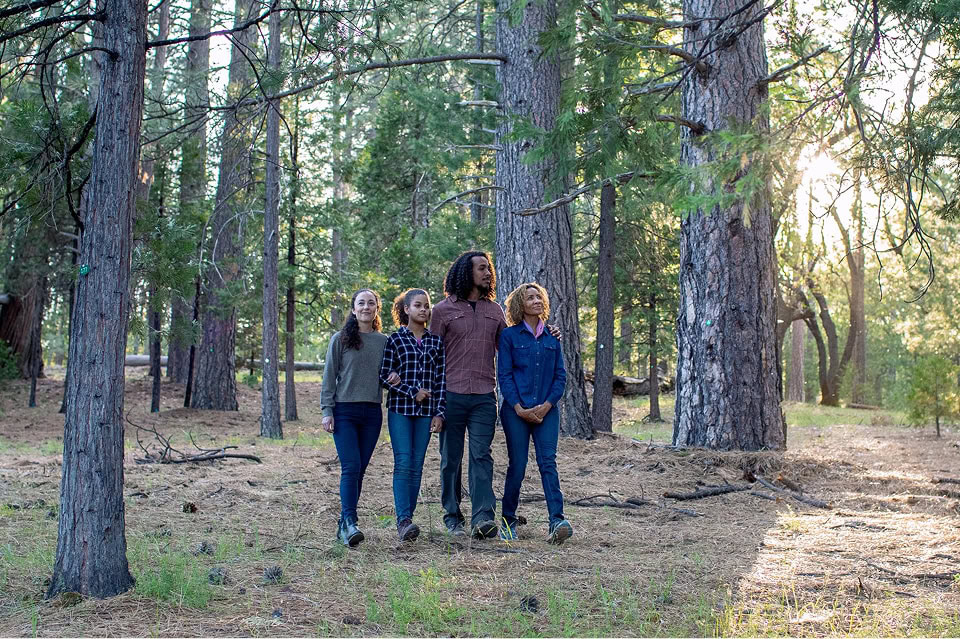
At its heart, it’s simple: a private, mature tree, in a protected Memorial Forest, that becomes part of your family’s story. When cremated remains are returned to the earth at the base of that tree, they nourish its roots and become part of something that’s already alive, already growing, and built to last for generations.
Instead of ashes sitting on a shelf or scattered without a place to return to, they become part of a mature, established tree—one that’s already decades old, already thriving, and already doing good for the land around it.
With a Memorial Tree, you’re not planting something new and hoping it survives. You’re joining a living forest that’s already there.
How It Works: Ashes and Trees Together
Cremated remains need care before they can nourish a tree’s roots. On their own, they’re too alkaline. That’s why the process is handled by people who do this every day, not something families are left to figure out on their own.
Here’s what’s actually involved:
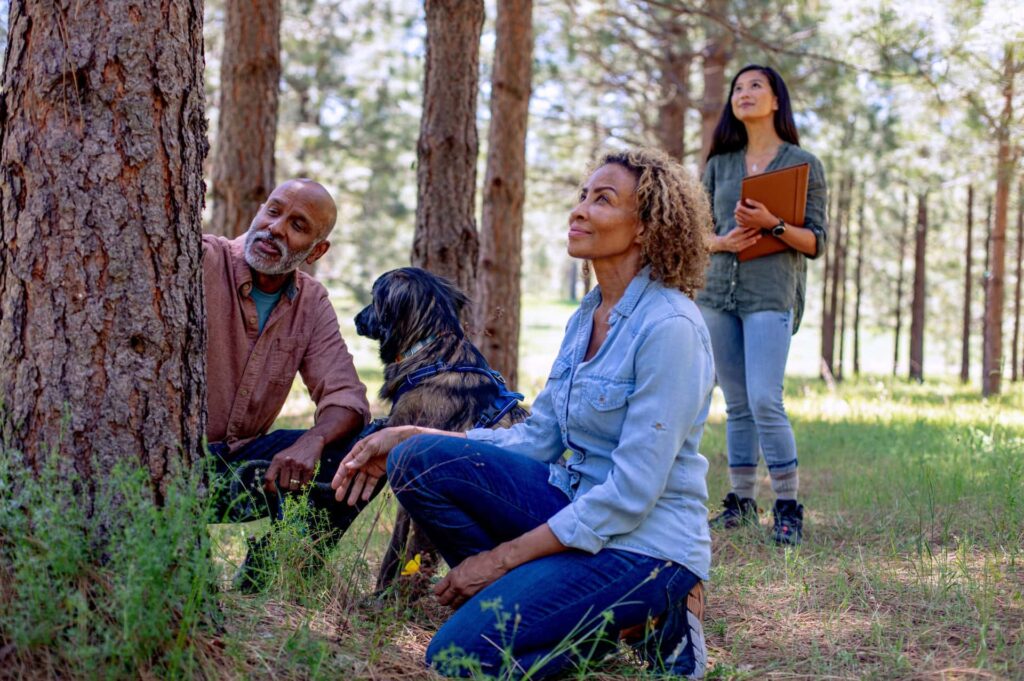
- Choose your tree and forest: Explore locations virtually or in person with a Guide, from redwood coastline to New England ridgetops, and find the tree and setting that feels right.
- Yours in perpetuity: Your tree is yours alone (or shared with the family and pets you choose), protected forever.
- Let the details be handled: Legal permits, paperwork, and the return of ashes to the soil are all taken care of before the day arrives.
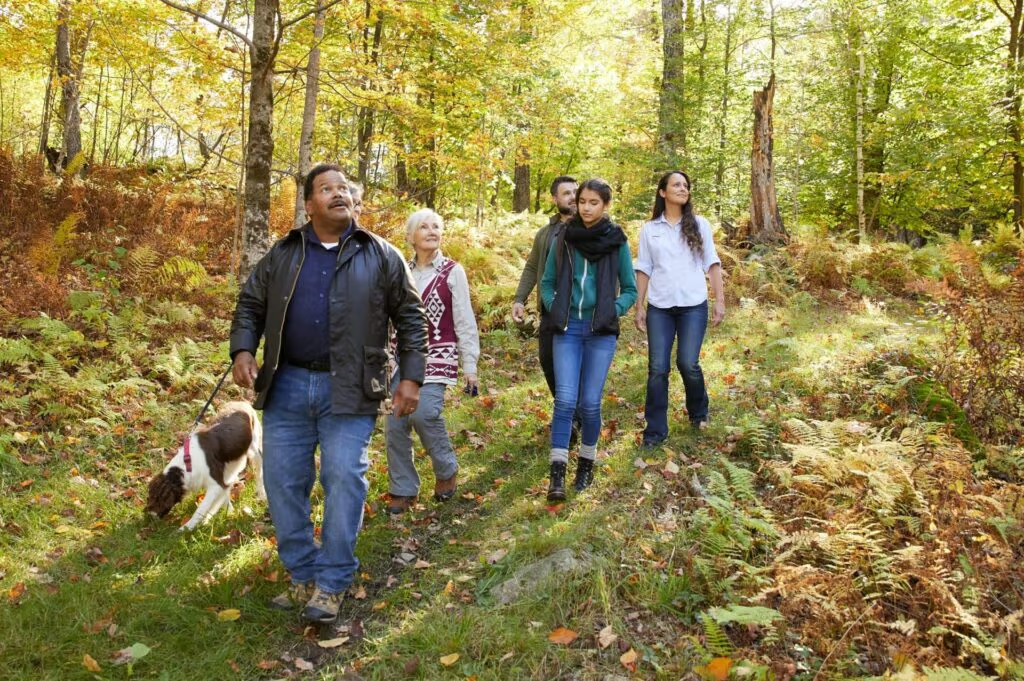
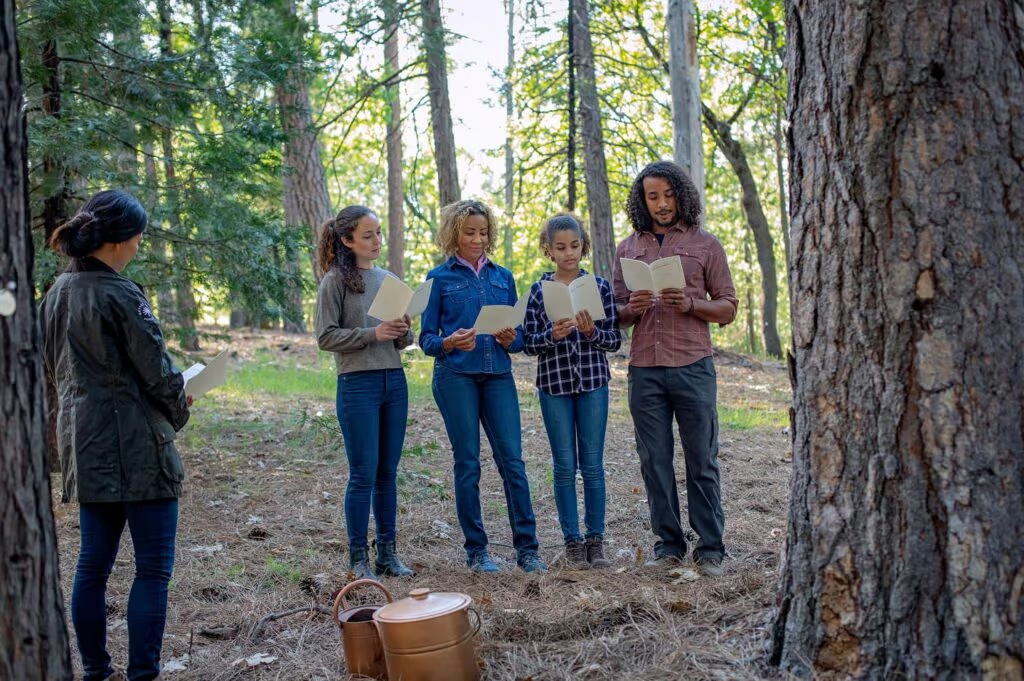
- Hold a memorial ceremony: Many families choose a personalized and guided Nature Memorial Ceremony in the forest at your tree, shaped around family traditions and wishes.
- Add a Memorial Marker: A custom bronze Memorial Marker can be placed at the tree with a name, dates, and a few words to honor your loved one’s legacy.
Why More People Are Choosing Memorial Trees
This option speaks to something a lot of families are quietly looking for:
- A lasting tribute: Flowers fade. A mature tree, already decades old, keeps growing for generations.
- Healing in nature: Time in a forest has a way of softening grief in a way a cemetery visit rarely does.
- An environmental gift: Because the tree is already established, it’s already absorbing carbon and supporting wildlife, no waiting years for a sapling to catch up.
- A place to return to: A rooted, real place. On birthdays, anniversaries, or any day that feels hard. For many families, that memory tree becomes part of the healing process.
- Room for the whole family: One tree can hold more than one person, plus pets, added over time as life continues.
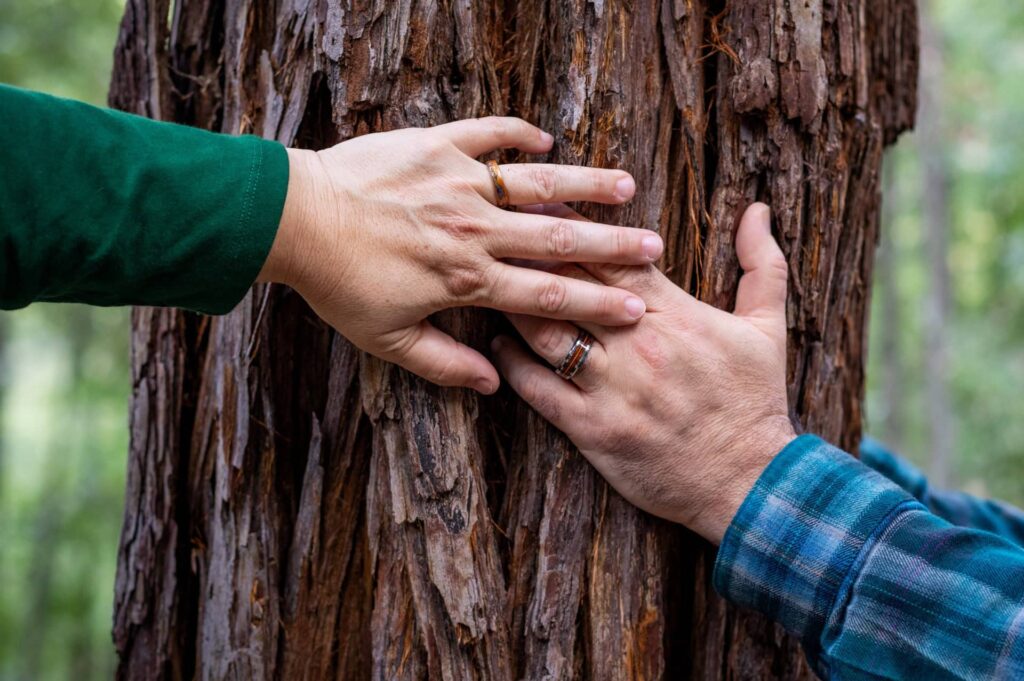
Protected Forests: When You Want to Plant, But Not at Home
Rather than planting in a backyard, where care, access and permanence are never guaranteed, Memorial Trees live inside protected forests across the country, from the Mendocino coast to the Berkshires. Each forest is placed under long-term stewardship: ecologically monitored, trail-maintained, and kept open to families indefinitely.
That protection matters in two directions. It means your tree will be cared for long after you’re gone. And it means the land itself is shielded from development—your memorial doubles as a small act of conservation, connecting to wildlife corridors and helping protect at-risk species’ habitat.
How Cremation Fits In
Every Memorial Tree begins with cremation, and families have more choice in that process than most people realize. Three carbon-neutral options are available:
Flame cremation: The most familiar option, using heat to reduce the body to ash over one to three hours, with ashes typically returned within a week.
Aquamation: A gentler, water-based process using warmth and a natural alkaline solution, using significantly less energy than flame cremation with no emissions.
Natural organic reduction: The slowest and most transformative option, using natural microbes over several weeks to turn the body into nutrient-rich soil rather than ash.
Whichever option a family chooses, what’s returned—ash or soil—can be kept, or brought to a Memorial Tree to complete the return to the earth. There’s no pressure to decide everything at once. Families can take their time, ask questions, and choose a path that fits their values.
Thinking About a Memorial Tree? A Few Things to Know
Mature trees, not saplings: Your memorial joins a tree that’s already healthy and established, not one that has to survive years of vulnerability first.
Every location is protected: Ashes are placed with all permits and legal requirements already handled.
A marker is optional, not required: Some families want a name and dates at the tree; others prefer the tree to speak for itself.
You don’t have to decide alone: A Guide can walk you through every option, with no pressure and no obligation.
Common Questions
Can any ashes be used?
Yes. They’re properly prepared and mixed with soil before being placed at the tree, so nothing about the process is left to families to figure out.
Can I plant one at home?
Better Place’s Memorial Trees are specifically mature, established trees within protected Memorial Forests — not new plantings at a private residence. That’s intentional: a young tree planted at home faces years of risk from disease, weather, and neglect that a decades-old tree in a stewarded forest doesn’t.
Will human ashes kill a tree?
They can. Ashes placed directly against roots in any quantity are alkaline and salty enough to damage a young tree, and this is the most common reason a memorial planting fails in its first year. Every reputable planting system includes a soil amendment for exactly this reason. Around an established tree, spread and mixed into a large soil volume, the risk is much lower.
How long do ashes last in the soil?
Indefinitely. Cremated remains are mineral, not organic matter, so they do not decompose the way a body or a wood chip does. They disperse into the soil over time and become chemically indistinguishable from it, but nothing about them breaks down on a timeline you could put a number to.
What is the best tree to plant with human ashes?
A species native to your region, and one tolerant of a range of soil pH. Native species establish faster and live longer than ornamentals chosen for appearance, and pH-tolerant species such as red maple handle an amended planting site better than acid-loving species do. Climate zone matters more than symbolism: the right species in the wrong zone is a dead tree in three years.
What if I want help with the whole process?
That’s the default experience. A Guide helps you choose a tree and forest, coordinates the cremation option that’s right for your family, and handles the legal details, so nothing is left to chance.
Is this an option regardless of which cremation method I choose?
Yes. Whether ashes or soil is returned, either can be brought to a Memorial Tree.
What’s the difference between a Memorial Tree and a Spreading Grove?
A Memorial Tree is a private, dedicated tree that one family can return to and add to over time. A Spreading Grove is a shared space within the same protected forest, where ashes are placed in a dedicated spot within a communal area rather than at an individual tree.
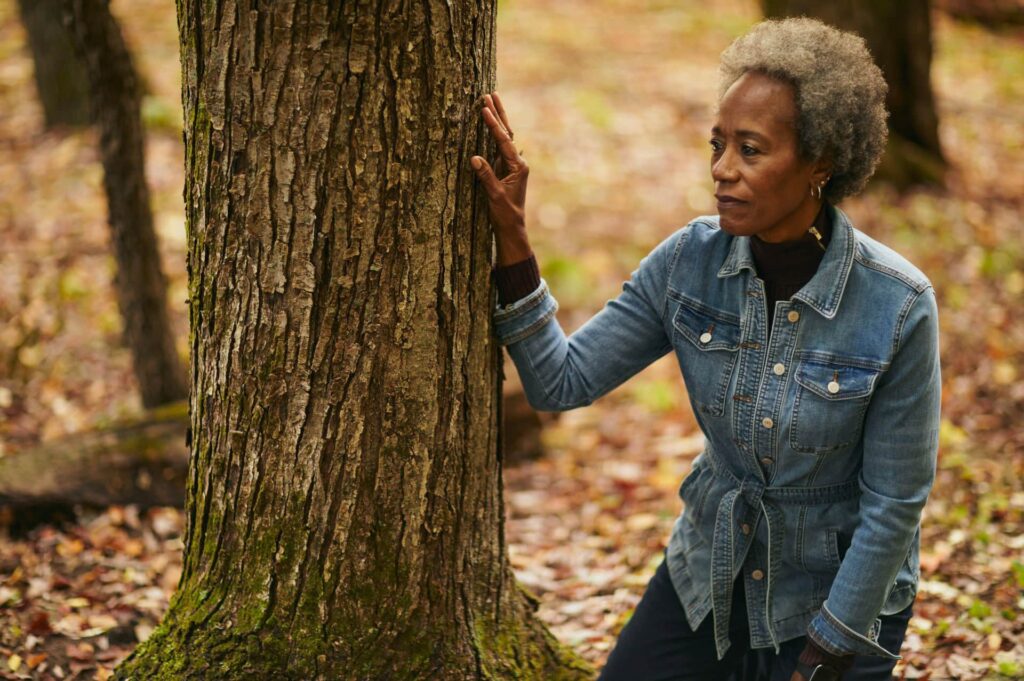
A Quiet Way to Keep Someone Close
In a noisy world, a Memorial Tree is a quiet act of remembrance. It doesn’t ask for attention. It’s simply there — already tall, already strong, already part of a forest that will be protected for generations.
If you’re considering this path, you’re not just choosing a way to say goodbye. You’re joining something that was already alive, and will keep growing long after.