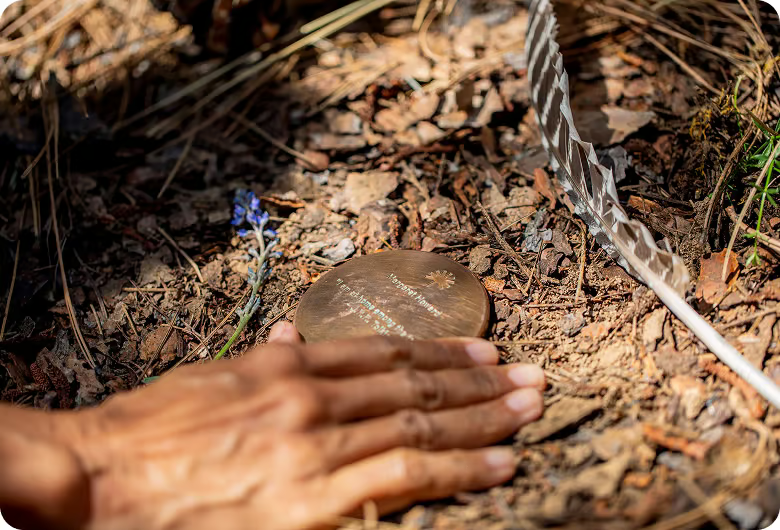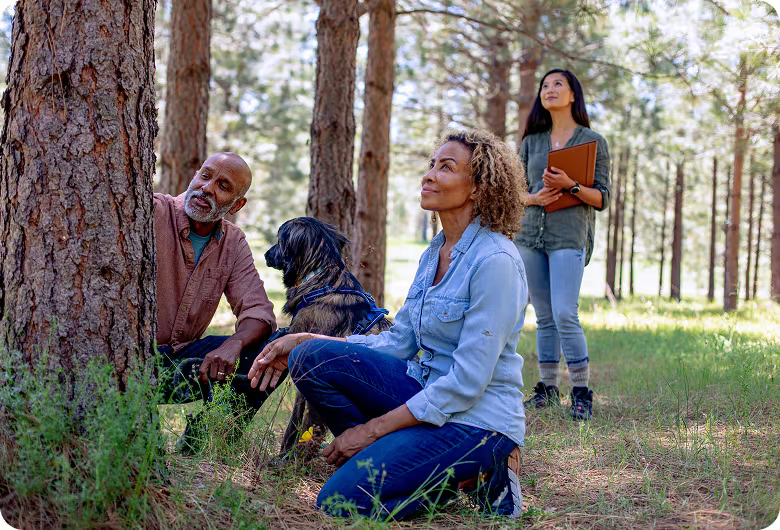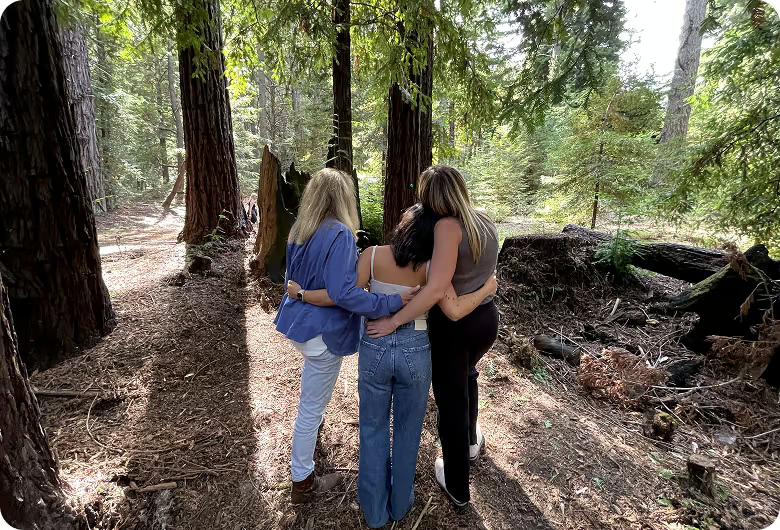
The best tree to plant in memory of a loved one is a tree that reflects a loved one or a family’s character. Because it’s a living memorial that’s keeps them alive
Planting a tree in memory: sapling vs. established tree
Most people picture planting a young sapling: choosing a species for what it represents, digging a hole, and watching it grow alongside a family’s memories. It’s a beautiful idea.
It’s also a fragile one. Roughly half of newly planted trees don’t survive beyond their first year or two. A tree that’s already mature and established, standing in a protected forest, gives a family the meaning of a memorial tree without the years of uncertainty about whether it will make it.
Planting a tree in memory can also mean something more precise: choosing the exact tree — a real, mature tree, already suited to who the person was and to the place it will stand for generations. Some families start with a species because it reflects who their loved one was. Others start with a forest, because a landscape already feels like home. Both are good instincts.
However, a private Memorial Tree lets you choose a specific, already-thriving mature tree in a protected Memorial Forest, so the sapling’s fifty-fifty odds never enter the picture.
Choose the location before you choose the species
A tree thrives as part of an ecosystem, not as a symbol in isolation. Before falling in love with a species, consider the region, climate, forest ecology, and the practical experience of visiting. A resilient tree that belongs in the landscape is often more meaningful than a species selected only for a traditional association.
- Is there a place that mattered to the person or family?
- Is the family hoping to visit weekly/monthly/annually?
- Which forests are practical to reach?
- What native tree species are appropriate and available there?
This approach also leaves room for the family’s own language. Someone who loved the high country, coastal forests, or a particular season may lead you toward a location before they lead you toward a species.
Memorial Tree species meanings
Each forest ecosystem is home to mature, established trees native to that landscape. Below are some of the species that thrive there for hundreds—even thousands—of years, along with their symbolism, meaning, character, and where you’ll find them.
Coastal Redwood
Majestic & Towering: Earth’s tallest tree, living up to 2,000 years. Their interconnected root systems symbolize family bonds that span generations.
Available in: Point Arena Memorial Forest, Santa Cruz Memorial Forest
Tanoak
Stately & Reverent: Moss-covered and elegant, living up to 1,000 years. These acorn-bearing trees provide vital sustenance for forest wildlife.
Available in: Point Arena Memorial Forest,
Douglas Fir
Versatile & Resilient: Among the world’s tallest trees, living up to 1,000 years. Valued wildlife habitat and a symbol of enduring adaptability.
Available in: Point Arena Memorial Forest, Santa Cruz Memorial Forest
Madrone
Striking & Graceful: Distinctive evergreen with peeling red-orange bark, living 200-250 years. Symbolizes renewal and transformation through life’s changes.
Available in Santa Cruz Memorial Forest
Black Oak
Beautiful & Giving: Striking bark and vibrant foliage, living up to 500 years. These acorn-bearing trees provide vital sustenance for forest wildlife.
Available in: Yosemite Gateway Memorial Forest, Lake Arrowhead Memorial Forest
Incense Cedar
Resilient & Fragrant: Elegant fern-like branches with a woody scent, living up to 1,000 years. Drought-tolerant and naturally insect-resistant, they embody resilience.
Available in: Yosemite Gateway Memorial Forest, Lake Arrowhead Memorial Forest
Ponderosa Pine
Noble & Charismatic: Towering giants with butterscotch-scented bark, living up to 600 years. Iconic and fire-resistant, it provides vital habitat for Sierra wildlife.
Available in: Yosemite Gateway Memorial Forest, Lake Arrowhead Memorial Forest, Flagstaff Memorial Forest
Quaking Aspen
Golden & Striking: Among the oldest living organisms, with clonal colonies living thousands of years. Their soft wood provides vital habitat for cavity-nesting birds.
Available in: Flagstaff Memorial Forest
Southern White Pine
Rare & Resilient: Beautiful with silky soft needles and slender cones. Tough and drought-tolerant, provides winter habitat for wildlife.
Available in: Flagstaff Memorial Forest
Red Maple
Resilient & Striking Scarlet fall foliage and early spring blooms define this versatile tree. Also known for its sweet sap that makes maple syrup.
Available in: St. Croix Valley Memorial Forest, Litchfield Hills Memorial Forest, Berkshires Memorial Forest
White Oak
Majestic & Hardy: Tower giants can live up to 500 years. Producing strong, decay-resistant wood, bold red-wine colored leaves, and timeless majesty.
Available in: St. Croix Valley Memorial Forest, Rock River Memorial Forest, Litchfield Hills Memorial Forest
Bigtooth Aspen
Caring & Connected: Their interconnected root systems link trees across generations, a living symbol of family bonds and the lives we share.
Available in: St. Croix Valley Memorial Forest
Red Oak
Exuberant & Giving: Forest providers, living up to 300 years. Producing abundant acorns for wildlife, brilliant red fall foliage, and highly-prized durable lumber.
Available in: Rock River Memorial Forest, Litchfield Hills Memorial Forest
Black Birch
Sunny & Sweet: Golden fall foliage and wintergreen-scented bark mark this sun-loving native. Its wood darkens beautifully to deep red.
Available in: Berkshires Memorial Forest
Hemlock
Poetic & Mystical: Shade-loving, soft-needled evergreen, living over 900 years. Provides vital shelter for wildlife and historic Vitamin C-rich needle tea.
Available in: Berkshires Memorial Forest
Hackberry
Strong & Deep-rooted: Resilient, can live up to 200 years. Produces berries for wildlife, cork-like ridged bark, and deep roots that control erosion along riverbeds.
Available in: Rock River Memorial Forest
Frequently Asked Questions
What is the best tree to plant in memory of a loved one?
The best memorial tree is one that fits the local ecosystem, has enough room to mature, and feels connected to the person being remembered. Oaks, maples, redwoods, evergreens, and flowering trees are common choices, but the right location and long-term health should come before symbolism.
What tree symbolizes remembrance or the loss of a loved one?
Cultural associations vary: oak often represents strength and continuity, evergreens constancy, redwoods endurance, maples change and seasonal beauty, and willow reflection or mourning. These are associations rather than rules. A tree that connects with the person’s story and suits the place can be meaningful regardless of its traditional symbolism.
Where should I plant a memorial tree?
Planting at home can offer a daily reminder and a hands-on ritual for a family that wants to care for the tree. Reforestation or gift-tree programs can suit families who want to support planting in someone’s honor without maintaining a tree themselves, though they may not provide a specific tree to visit. A protected memorial forest can offer an identifiable place of remembrance with ongoing stewardship. Choose based on whether the family wants to care for the tree, visit it, or preserve the tribute long-term, and confirm the location’s access and care arrangements.
What is the difference between a memorial tree and a tree planted in someone’s name?
A memorial tree usually refers to a specific, identifiable tree that a family can connect with and, where access allows, visit. A tree planted in someone’s name through a general reforestation program often supports a wider planting effort without assigning a particular tree or a permanent place to visit. Both can be meaningful; check whether the program identifies an individual tree and provides ongoing access and care.
Find the tree that’s already grown
There’s no single right species, and no rule for what a Memorial Tree should be. But there is a real difference between planting something and hoping, and choosing something that’s already alive, already established, and already standing in the place it belongs.
Explore our protected Memorial Forests to see the mature trees available in each and find the one that feels right for your family.