The grace of the willow tree has long inspired art, verse, and memorial traditions. Discover its timeless symbolism across cultures and its role in healing and remembrance.
The willow tree symbolizes grief, resilience, and renewal. Across cultures it stands for sorrow expressed openly, strength through hard seasons, and rebirth, because a willow can regrow from a single cut branch. Its long, draping form has made it a memorial symbol for centuries.
What Does the Willow Tree Symbolize?
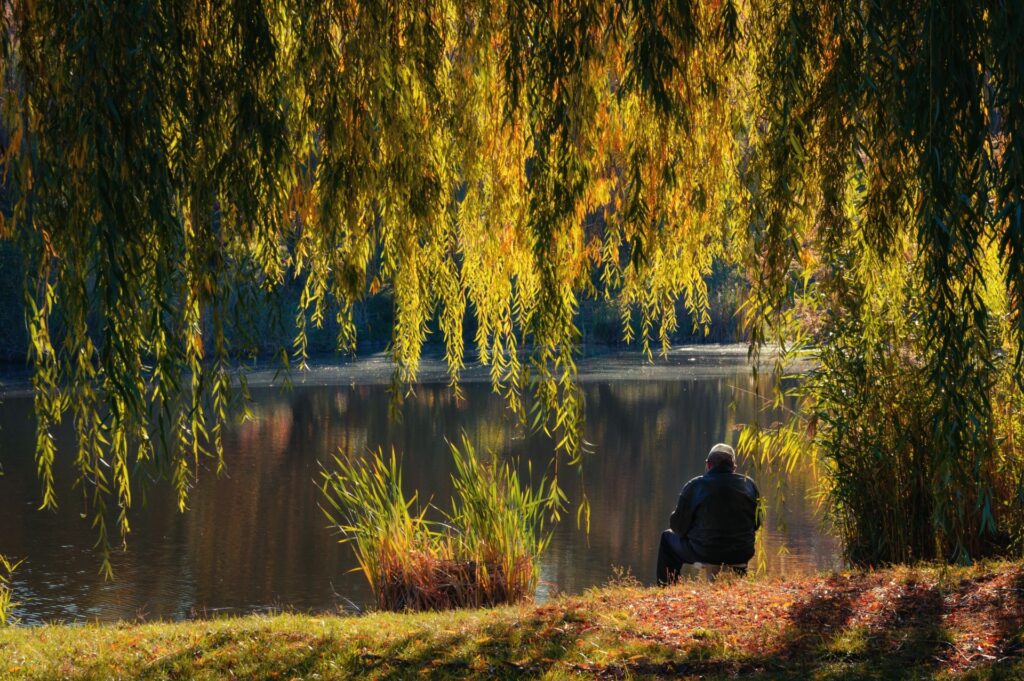
- Grief / mourning (weeping form): Willow trees are often linked with grief because the weeping willow’s drooping branches look like someone bowing their head or crying.
- Renewal / rebirth (regrows from cuttings): Willows symbolize renewal because they regrow from cuttings: new roots and shoots form from a cut branch, even after the tree has been cut hard back.
- Emotional healing: Willows are associated with emotional healing because they represent releasing heavy feelings and slowly returning to steadiness after loss.
- Intuition (near-water association): Willows are tied to intuition because they commonly grow near rivers and streams, and water is a long-standing symbol of feelings, inner knowing, and reflection.
- Fertility / new life: Willows can symbolize fertility and new life because they grow quickly, spread easily, and are strongly connected with springtime, new growth, and fresh beginnings.
Willow Name and Plant Family
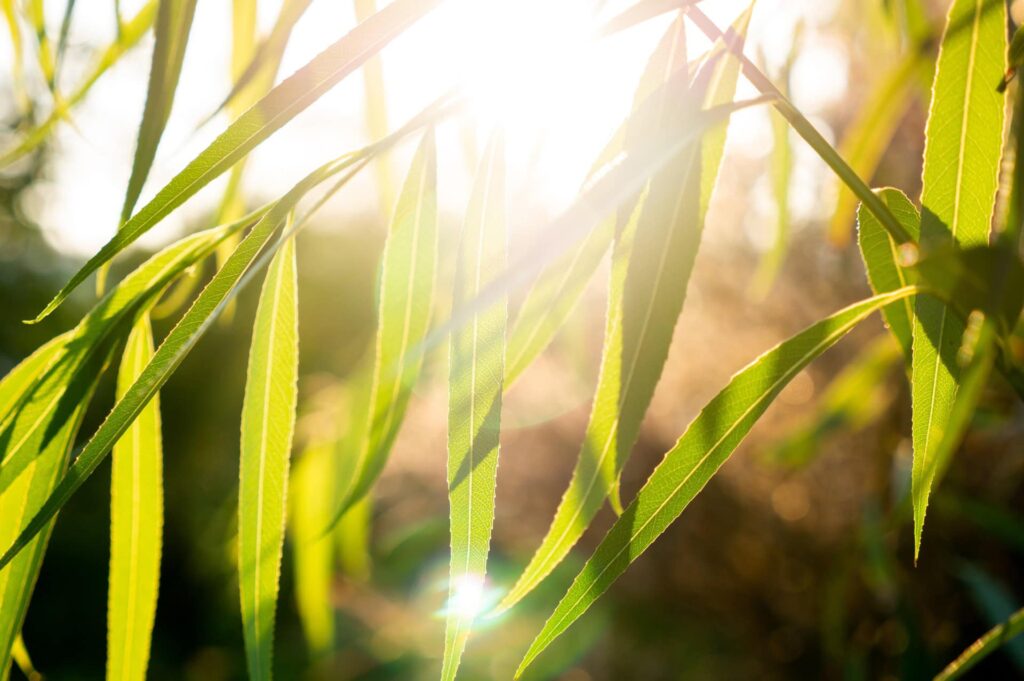
The word willow traces back to Old English welig, an early name for the tree. Willows are part of the Willow family (Salicaceae), a group of trees and shrubs found in many temperate regions. Most willows belong to the genus Salix, which includes familiar types like weeping willow and white willow. There are many Salix species, but they often share a similar look: long, flexible branches and narrow leaves. Because willows commonly grow near rivers, streams, and wetlands, they’re frequently associated with water and water-edge landscapes.
Cultural Meanings of the Willow Tree
- China Associated with immortality and renewal, willows were planted near temples for protection, and in art, they symbolize gentle strength.
- Greece Linked to water and the moon, willows were sacred to deities of magic and the underworld, embodying healing and intuition.
- Celtic Lore Guardians of dreams and deep feelings, the willow was revered by druids as a tree of lunar magic and emotional healing.
- Victorian England The weeping willow became a common motif on gravestones, representing mourning and the soul’s tenacity.
Willow in the Celtic Tree Calendar
- Celtic Tree Calendar name: Willow (Saille)
- Ruling planet: Moon
- Ruling element: Water
- Lunar realm: intuition, dreams, and reflection
What does the willow mean in the Bible?
In Psalm 137, willows appear in a scene of exile and sorrow: the people mourn by the rivers of Babylon and describe how they “hung our harps” on the willows, linking the tree with grief, loss, and displacement. In Leviticus 23:40, “willows of the brook” are named as part of a religious observance, tying willow to water-edge places like streams and riverbanks. Taken together, these passages connect willow with mourning in hard seasons and with ritual life near flowing water.
What does a weeping willow tree mean?
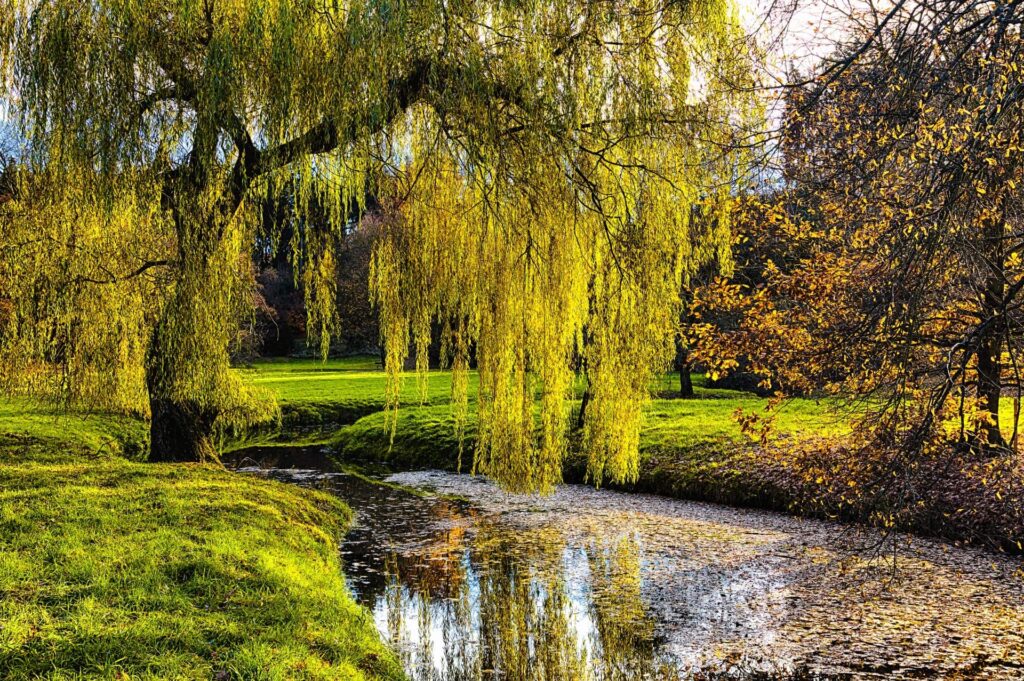
The weeping willow is the variety most tied to mourning. Its drooping branches look like a figure bowed in grief, which is why weeping willows appear on Victorian mourning art, old gravestones, and rural cemetery carvings, where the tree often stands in for the tree of life. Spiritually, the weeping form carries the same double meaning as the willow family as a whole: sorrow expressed openly, and renewal underneath it, since even a cut willow regrows from its branches. Families often choose a weeping willow image for memorial cards or plant one as a living tribute to someone deeply missed.
Weeping willow or willow: does the difference matter?
For symbolism, yes, a little.
Willow covers the whole genus, several hundred species of Salix, most water-loving and quick to regrow. The family meanings are resilience, renewal, intuition and emotional healing.
Weeping willow is one particular form, and its drooping shape is why it, rather than willows in general, became the mourning tree. It is the weeping willow that appears on Victorian gravestones and mourning samplers, usually standing in for the tree of life.
White willow is the medicinal one, the source of the bark compound behind aspirin, which is why it carries associations of healing rather than grief.
For a memorial card, the weeping form reads unmistakably as mourning. For a living tree, any willow carries the renewal meaning, and an upright one reads as recovery rather than sorrow.
Willow tree tattoo meaning
A willow tattoo usually marks loss carried with grace: grief for someone specific, survival of a hard season, or quiet resilience. The weeping form leans toward mourning and remembrance, while an upright willow with new shoots reads as healing and regrowth. Many people add initials, dates, or birds leaving the branches to stand for a loved one. Because the willow regrows from cuttings, it is one of the few mourning symbols that is equally a symbol of recovery.
Willow in folklore, literature, and magic
Folk traditions across Europe treated the willow as a threshold tree, standing between water and land, life and what follows. In Celtic lore it belonged to the moon and to intuition; in English folk custom, wearing willow meant openly mourning a lost love, which is why Shakespeare gives Desdemona a willow song in Othello and Ophelia her willow in Hamlet. In folk magic, willow branches were favored for wands and water divining, and planting a willow near the home was said to guard against sorrow settling in. These stories circle the same idea the tree still carries in memorial spaces today: grief acknowledged, and life continuing.
Are willow trees unlucky?
Willows carry a double reputation, and the superstitions run both ways.
The unlucky readings are about grief rather than harm. Wearing willow was the old English sign of mourning a lost love, so the tree became shorthand for sorrow, and a folk saying warned that a willow planted too close to a house would draw sadness to the door.
The protective readings are just as old. In China willows were planted at temples to guard against harm and carried at spring festivals to sweep away bad luck. In Celtic lore the willow belonged to the moon and to intuition, and its branches were cut for wands and for water divining.
The honest answer: willows are not unlucky so much as unavoidably associated with grief, and that is precisely why families choose them for memorials. A tree standing for open sorrow and for regrowth from a cut branch does both jobs at once.
Willow Tree Spiritual & Emotional Meanings
- Healing After Loss The willow’s graceful posture mirrors grieving, while its ability to regenerate offers comfort and hope.
- Emotional Depth Growing by water, the willow reflects emotional clarity and intuitive strength.
- Bridge Between Worlds Often seen as a link between life and beyond, willows offer solace that love lingers even beyond death.
The Willow Tree in Memorial Art and Spaces
- Gardens and Forests Willows planted in memory gardens shade quiet spaces meant for reflection.
- Cemetery Symbolism Engraved weeping willows on headstones offer timeless comfort and remembrance.
- Art & Literature From Shakespeare to contemporary poetry, the willow evokes longing, love, and the cycles of life.
Choosing a willow as a memorial
If the symbolism has brought you this far, the practical questions come next.
Willows need room and water. A mature weeping willow is a large tree with a spread to match, and its roots seek water, which makes it a poor choice near a septic field, a drain run, or a foundation. By a pond or at the low end of a yard, they thrive.
They grow fast and do not live especially long. For a memorial measured in generations an oak or a beech is the longer promise; for one that establishes within a few seasons, the willow is hard to beat.
A cutting carries the meaning best. Because a willow regrows from a cut branch, one tree can become several, and families sometimes root cuttings for each of the person’s children. It is the only common memorial tree where the symbolism and the propagation are the same act.
If you cannot plant one yourself, a memorial forest holds and maintains the tree on protected land, which suits anyone without a permanent yard. See how that works with a memorial tree or a spreading grove.
Key Takeaways
- The willow intertwines grief with resilience, signaling loss while reminding us renewal is possible.
- Across cultures, from Psalm 137 to the Celtic tree calendar to Shakespeare, it stands for intuition, healing, and the beauty of life’s cycles.
- For memorials, both living and artistic, the willow is a profoundly meaningful choice.
In every swaying branch and rustling leaf, the willow speaks of sorrow and remembrance, of enduring love, and of life’s quiet promise to continue.